




Previously, duty free shops are closely linked with overseas trips and airports where people could buy international items at a discounted price due to the exemption of taxes. Chinese consumers have great passion for duty free goods, as Morgan Stanley has once pointed that one-third of global duty-free sales come from Chinese consumers, making China the world's largest outbound tourism market by visitor spending [1].
Different from airport duty free shops which consumers have been familiar with, duty free shops in downtown areas in China have garnered little attention. However, since the domestic economy was severely affected by the outbreak of COVID-19 epidemic this year, the government has ramped up efforts to spur domestic consumption to stabilize the economy and the support for the development of duty-free outlets in downtown areas is one of the incentives.
Policy support
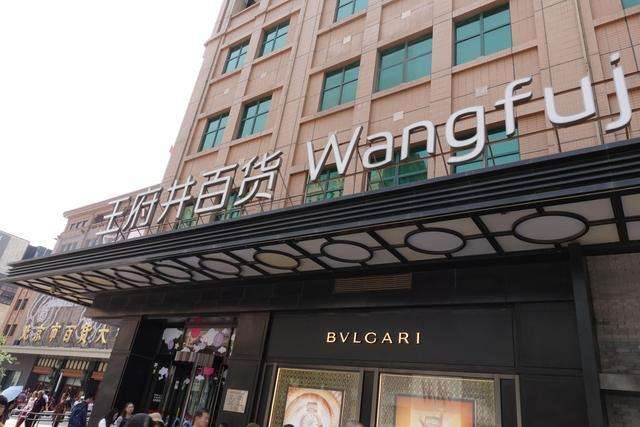
Wangfujing acquires duty free license
In June, the Ministry of Finance granted Wangfujing Group the duty-free retail license, which means that Wangfujing became the first retail enterprise to enter the tax-free industry. The group has been operating more than 50 department stores in 33 cities across the country by the end of 2019 [2]. On July 8, Wangfujing announced that it plans to invest in the establishment of a wholly-owned subsidiary, Beijing Wangfujing Duty free Products Management Co., LTD., with a registered capital of 500 million yuan, which will be used to support relative businesses.
Hainan offshore duty-free shopping policy adjustment
In June, a joint statement [3] released by the MOF and China's customs and taxation authorities said that Hainan province will increase its annual tax-free shopping quota for travelers from the current 30,000 yuan (about 4,230 U.S. dollars) to 100,000 yuan (about 14,123 U.S. dollars) per person per year. In addition, the categories of duty-free goods are expanded from 38 to 45. The current tax-free limit of 8,000 yuan for a single product will be lifted, and the number of categories with a single-purchase quantity limit will be significantly reduced. The new policy has come into effect on July 1.
Other policies:
In March, 23 departments including the National Development and Reform Commission (NDRC) jointly issued a document, proposing to improve the downtown duty-free shop policy and establish a number of duty-free shops in downtown areas with Chinese characteristics.
The management committee of the Lin'gang section of Shanghai Pilot Free Trade Zone has unveiled plans for a 30,000-square-meter duty-free store in downtown areas.
The Shenzhen government has issued a document, proposing to boost the duty-free shop business in downtown areas and promote the full coverage of duty-free shops in key business districts to attract consumers.
Chinese duty free shop modes
At present, China mainly adopts the franchise mode for duty-free business. According to Wanlian Securities, there are currently only 8 enterprises with government approval to sell duty-free goods, including China Duty Free Group (CDF), Sunrise Duty Free, Shenzhen Duty Free, Zhuhai Duty Free, Hainan Duty Free, China National Service Corporation for Chinese Personnel Working Abroad (CNSC), Zhongqiao Duty Free and the newly approved Wangfujing. Among them, CDF is a relatively stronger player. According to Guotai Junan Securities, since 2017, CDF has obtained 51% of the shares in Sunrise, as well as the airport duty-free license in major cities such as Beijing, Shanghai, Hong Kong, Macao, Guangzhou, and duty-free licenses in Haikou. In 2019, the duty-free business of CDF and Sunrise totaled 45.82 billion yuan, accounting for 82% of the market [4].
There are three types of duty free shops in China, namely airport duty free shops, downtown duty free shops and offshore duty free shops (Hainan). Duty-free shops in downtown areas mainly target foreign tourists and citizens with exit and entry records. For example, CDF duty-free shops in Beijing are mainly for foreign tourists through "in-store reservation, port pick-up", and CNSC duty free shops only serve consumers with exit and entry records within 180 days. This year, to stimulate consumption, it has extended exit and entry time record limit to one year [4].
As for the newly approved Wangfujing, according to online information [5], the off-line duty-free business will serve both inbound foreigners and inbound returnees. In particular, consumers with entry and exit records may become the main target group of Wangfujing duty-free business.
Tremendous market outlook
For South Korea, downtown duty-free shops have become an important engine of consumption growth. In China, the duty-free business mainly depends on airport duty-free shops, while the sales of downtown duty-free shops account for less than 1% [6]. For such a market that has not yet been fully developed, there is a lot of room for growth. Compared to airport duty-free shops, downtown stores have greater flexibility in location, lower rent-to-sales ratio, more product varieties and more spared shopping time for consumers.
According to statistics from the Ministry of Commerce, the total amount of tax-free goods purchased overseas by Chinese residents exceeded 180 billion yuan in 2018, accounting for 34.8% of the global tax-free market sales. In sharp contrast to this figure, sales of duty-free goods in China market last year were only about 55 billion yuan [4]. With the implementation of preferential policies towards downtown duty free stores and the liberalization of the licenses of duty-free operators, China’s downtown duty-free market is expected to grow at a faster pace. According to Guotai Junan Securities, if only considering the four first-tier cities of Beijing, Shanghai, Guangzhou and Shenzhen, the revenue of the downtown tax-free market will reach 17.25 billion yuan and the profit is going to reach 3.45 billion yuan in 2023 [5].
Implications for foreign brands
The government support for the development of the downtown duty-free shops means huge opportunities for foreign brands who have suffered a lot in 2020 H1 for the loss of lucrative Chinese tourists. It also means, in addition to CBEC, there is another easy market access for foreign brands due to China’s further opening up.
The booming Hainan offshore duty-free business is a stellar example. Customs statistics [7] show that from July 1 to 7, the first week of the implementation of the new tax-free shopping policy, the island has recorded a total shopping amount of 450 million yuan, duty exemption of 65.71 million yuan, and an average daily duty exemption of 9.39 million yuan, an increase of 58.2% over the first half of the year. The top three purchased categories are cosmetics (83.5%), perfumes (4.7%) and jewelry (1.8%) and the top three categories by sales are cosmetics (51.3%), jewelry (14.1%) and watches (11.9%), which are all dominant categories for international brands.
***Disclaimer: All images used in this article are from the internet.


